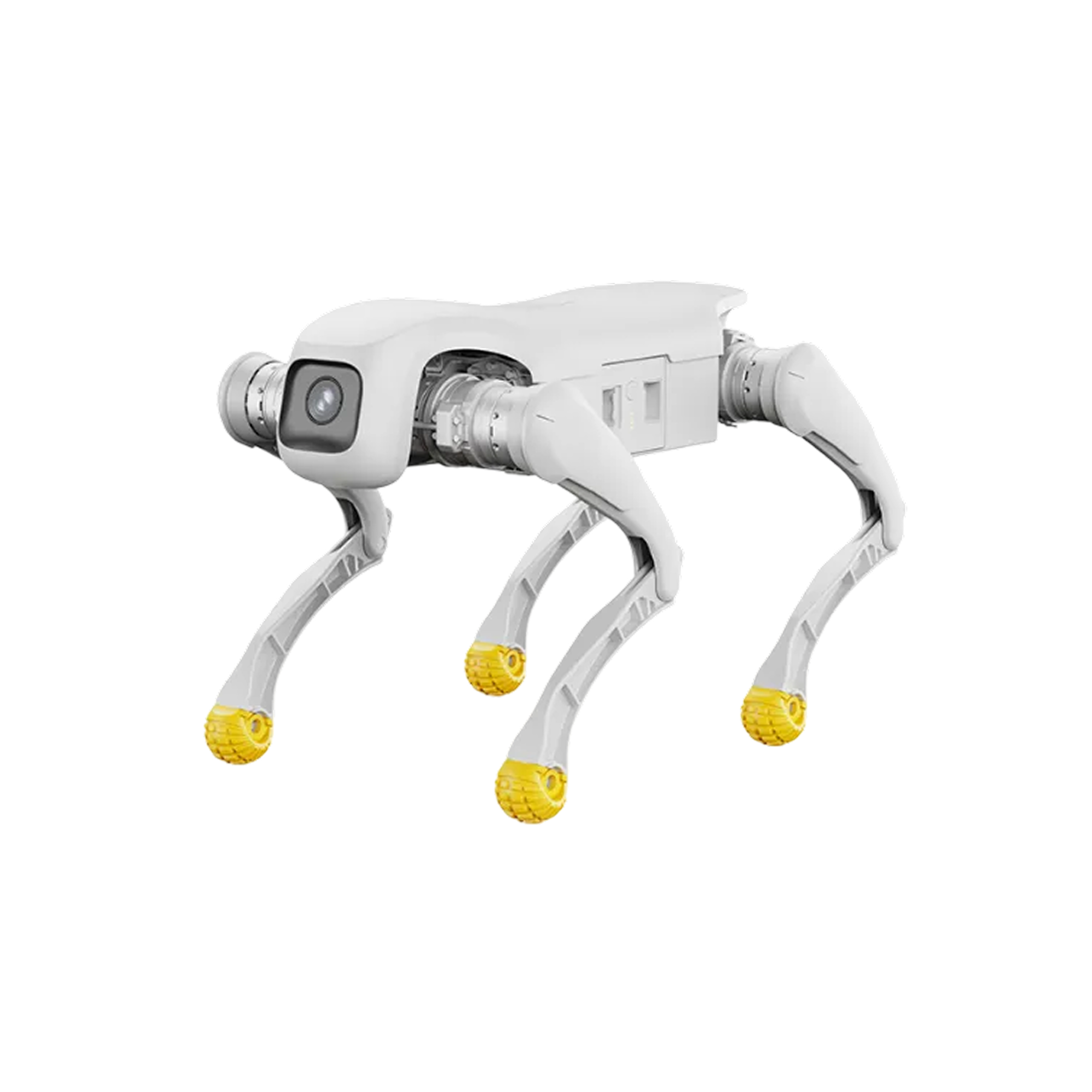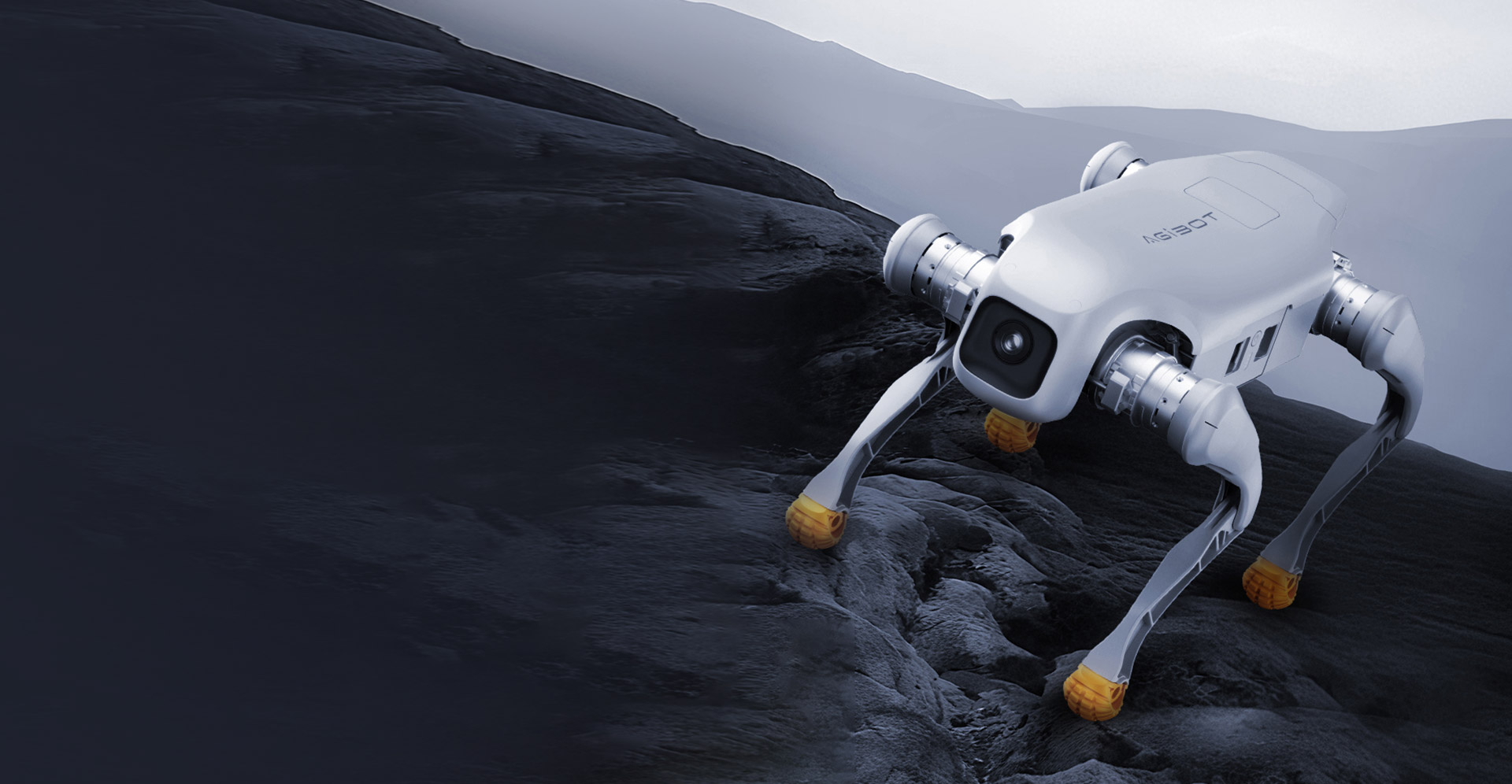
Mobility matched to the site.
Choosing a quadruped means considering stairs, slopes, surfaces and payload. D1 models differ in payload capacity, operating conditions and expansion options.
 Robotics
The software and equipment required for these applications are specified in the quotation.
An SDK-enabled quadruped for robotics teaching, locomotion research and application development.
The price is indicative.
Availability and configuration are agreed individually.
Choosing a quadruped means considering stairs, slopes, surfaces and payload. D1 models differ in payload capacity, operating conditions and expansion options.
Developer access and expansion interfaces allow the connection of custom sensors, communication devices and control software. Autonomous operation also requires suitable software and site configuration.
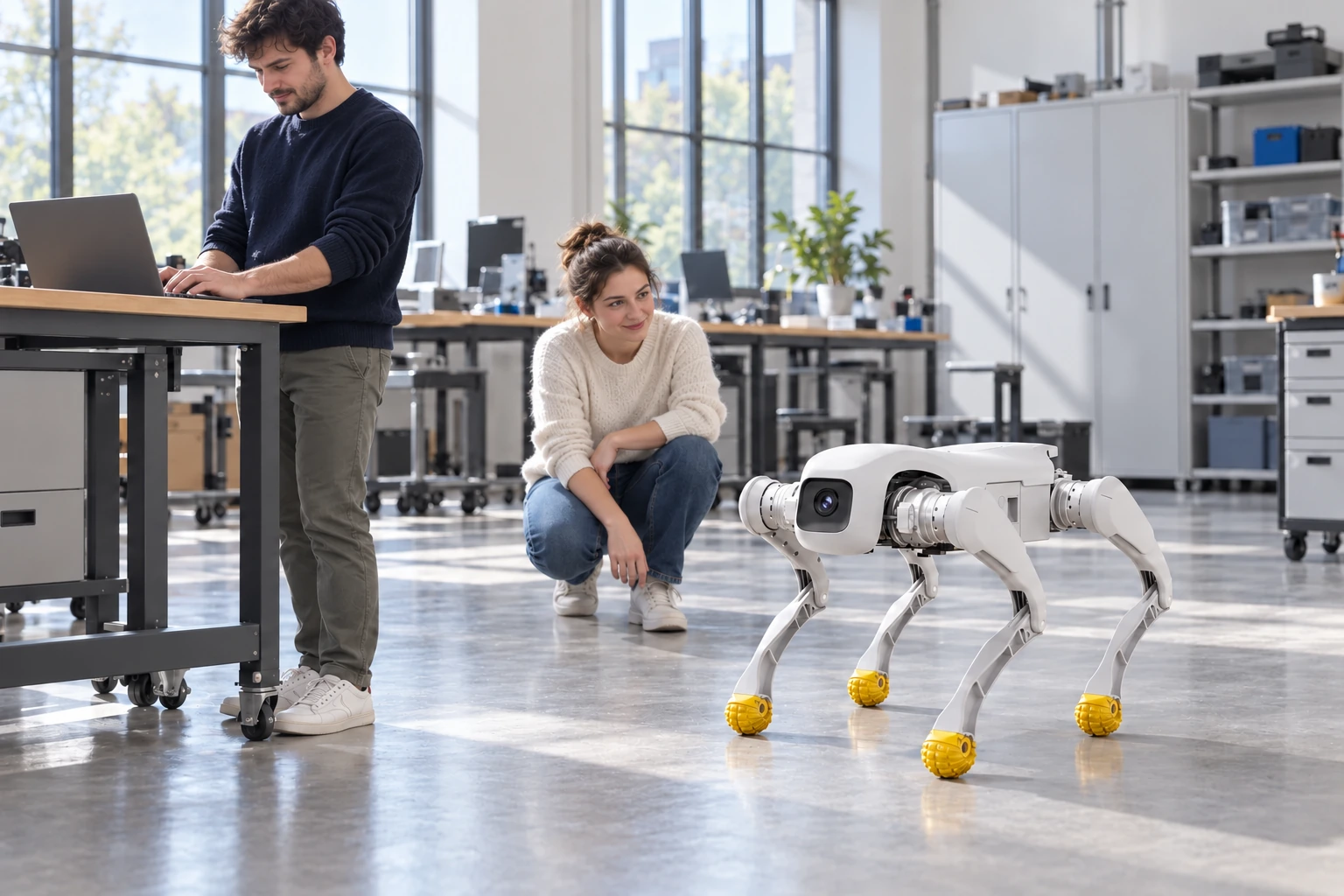
Payload, terrain and speed all affect operating time. Operational planning also covers the charging location, battery changes and the operator’s tasks.

A 1920 × 1080 wide-angle camera.
A replaceable battery module in the robot body.
Wi-Fi and Bluetooth connections for control.
Operate the robot using a remote controller or mobile app.
Dynamic balance control and predefined movement programmes.
Integrate cameras, LiDAR or a computing module for the development setup.
SDK support for custom control and research applications.
Additional sensors and computing modules are agreed for the selected EDU configuration.
Manufacturer specifications and measurement conditions, organised by topic.
Source: AGIBOT ↗
Data comes from the manufacturer’s D1 Pro / EDU comparison table. Motion figures apply under test conditions. EDU supports custom development; Pro does not.
Actual performance depends on the environment, load, software and configuration. Maximum values may reflect different test conditions and may not be achievable simultaneously.
The confirmed quotation itemises the equipment and licences included in the delivery. Illustrations may show optional accessories.
Software, accessories and deployment requirements are agreed for the selected application.

Investigate locomotion, sensor use and custom robotics applications with EDU development access.

Research camera-based or sensor-based inspection using suitable add-ons and custom software.

Evaluate route following, supervision and environmental sensing in a configured test area.

Introduce visitors to quadruped robots through engaging, supervised movement demonstrations.
Applications include entertainment, education, research, inspection and patrol work; task-specific functions depend on configuration and development.
No. It is intended for light loads and must not be used for riding or passenger transport.
A charge typically provides one to two hours, depending on operating conditions.
The EDU edition requires custom development for autonomous following.
Product data and manufacturer images: AGIBOT. For custom solution packages, the reference describes the base platform.
We help select the right model, equipment and services.